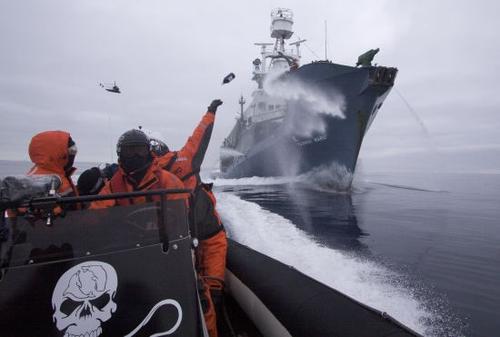

Armed with water cannons and harpoons, the Japanese ships are indeed quite dangerous when tampered with. This season, however, they have decided the fight is not worth the effort. Though the SSCS has essentially one this season's war on whaling, Paul Watson, the founder of the Sea Shepherd group stated, "We will however stay with the Japanese ships until they return north and make sure that they're out of the Southern Ocean whale sanctuary." The Japanese halted their attempts on February 10th, but they have an opinion of their own on the matter.
Japan's Farm and Fisheries Minister Michihiko Kano stated publicly, "Even now the mother ship is being chased, and it is difficult to ensure the safety of the crew members." Japan's fleet consists of approximately 180 ships designed for whale hunting, which intend to kill nearly 1000 whales in this one season. Though every ship is technically for scientific study of the whales, most of the corpses will eventually end up in the food industry as various preparations. Even with such an immense fleet, the SSCS has managed to stop this practice by preventing ships from drawing the whales onto the ships. Many Japanese citizens claim not to consume whale on a daily basis, yet still feel the interference from activists is unjustified and disrupting a cultural tradition that has been carried out for centuries.
As this season comes to an end, the SSCS, as well as many anti-whaling efforts carried out by Australia and New Zealand, the Japanese have successfully been given the message, though this success will be short lived, as next year will be just as chaotic for all activists, and possibly with more challenges. Fortunately for hundreds of whales, they can live out a fulfilling life, without the possibility of being slaughtered.
Personally, I applaud these activists' efforts, and am very glad that our planet's ocean will have a little less blood in the water this year. If any readers would like to continue and follow these efforts, the Sea Shepherd Conservation Society has its own website, where information will be constantly updated, as well as give an opportunity to donate to their efforts. I will be keeping my fingers crossed that these activists, in unison, will be able to dismantle the destruction of whaling, and cause it to inevitably take a final dive.


No comments:
Post a Comment